

The History of CHDS Explore Our Story
This page presents the developing history of CHDS.
We have designed this page to bring together events important to the Study Members, the milestones of CHDS, and meaningful happenings in Aotearoa New Zealand. Our timeline follows these events from the birth of our Study Members until 2026, which will continue to evolve as our study continues.
We highlight the progress and the effects that CHDS has had across Aotearoa and around the world.
-
1970s
Christchurch Health and Development Study started in 1977, marked by the birth of the Study Members. The CHDS cohort was formed between the 15th of April and the 5th of August, 1977 with the recruitment of 1265 children born to mothers across all of the birthing centres in Christchurch.
Before CHDS became CHDS
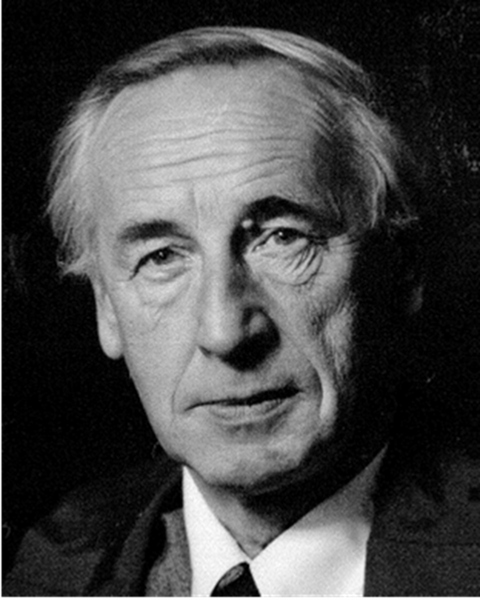
The initial inspiration for the Christchurch Health and Development Study came in the early 1970s. The primary motivating issue was the impact of single parenthood on the health and wellbeing of children. Professor Fred Shannon (see associated photo, circa 1974), who was the Foundation Professor of Paediatrics at the Christchurch School of Medicine, saw a marked increase in single parent families, who formed a disproportionate fraction of Shannon's case load.
To address these issues Prof. Shannon started a relatively small case-control study in which he intended to compare 100 children from single parent families with 100 control families. For various reasons, Prof. Shannon's initial study did not reach completion. However, by this time the New Zealand Medical Research Council (the forerunner of today's Health Research Council) had become interested in this line of research. As a consequence, the MRC invited Dr Mia Kellmer Pringle to New Zealand to provide consultation.
Dr. Pringle was a child psychologist, and the founding director of the British National Children's Bureau, where she oversaw the influential National Child Development Study. Her advice was that New Zealand should invest in a longitudinal study of a birth cohort of about 1000 children to study the family, social, economic and related factors that placed children at a disadvantage. The MRC accepted the recommendation and provided preliminary funding for the study.
In 1975, Prof. Shannon hired a young researcher named David Fergusson, who had been working on a longitudinal study at the Ministry of Social Welfare (now known as the Ministry for Social Development), analysing a longitudinal study of 5,000 children born in 1958. That study had been aimed at documenting the antecedents of delinquency in young people. Fergusson was appointed to lead the new study, then called the Christchurch Child Development Study. By the end of 1976, a research design had been developed, funding for two years obtained, and staff appointed, including statistician John Horwood, who would remain with the Study for over 40 years.
The cohort was formed in 1977 with the recruitment of 1265 children born to mothers across all of the birthing centres in Christchurch, who gave birth between 15 April 1977 and 5 August 1977. Of the children born in Christchurch in that period, 97% were enrolled in the Study by their parents.
It's worth noting that by recruiting through the birthing centres in Christchurch in 1977, it means that babies born to people from all walks of life were included, making the Study Member cohort a fair representation of people in Christchurch of that time.
Data Collection in the 1970s
Data collection in the 1970s, started at birth. The Study Members enrolled in the study by their parents (mostly, mothers) and their parents were also interviewed in the few days following the child's birth, while the mother was still in hospital.
Further data collection happen when the Study Members were four months old, one year, and every subsequent year until they turned 16 (details about further data collection are provided below).
Data collection in the 1970s included information provided the parents and medical information. By talking to parents and collecting medical information in the first year of two of the Study Member's life, CHDS created a detailed “starting point” for each participant, making it possible to understand how early experiences shape health and wellbeing across their lifetime. An example of this data collection was focused on infant feeding practices in the Study Member's first year, including breast- or formula-feeding.
-
1980s

The 1980s was a decade that held many significant moments for CHDS and its study participants. These moments ranged from key findings from CHDS researchers regarding lead and air pollution exposure to moments in history that influenced aspects of the cohort’s experience of the 80s.
Canterbury air pollution
Throughout the 80s Christchurch and other areas in Canterbury experienced high air pollution rate, particularly during the winter months. Although this is still an ongoing issue for the region, the 80s highlighted a need for more research into the effects of air pollution exposure on the health of New Zealanders. The theme of air pollution continues to maintain relevance in research done by CHDS linking key ideas like mental health and cognitive function to historical air pollution exposure. Research findings that utilized data during this time period includes a 2024 study done by CHDS in collaboration with the University of Canterbury’s Geohealth lab. A primary aim of the study was to explore the feasibility of linking historical air pollution data with CHDS’s birth cohort data by examining patterns and causes of air pollution exposure over time. This research showed that through linking the study participant's data with historical air pollution data, an inequity of exposure due to sociodemographic factors is revealed.
Operation Tooth Fairy
CHDS cohort members may remember their teeth being collected for 50 cents in the early 1980s. Operation Tooth Fairy became known amongst parents of the cohort members for paying more than the average price for a tooth. However, back in the chemistry lab at the University of Canterbury study participants teeth were put to good use. Levels of lead exposure could be measured in the cohort’s teeth which was useful in allowing CHDS researchers to find the relationship between lead exposure and behavioral and cognitive outcomes. One paper published in 1993 in the Journal of Child Psychology and Psychiatry shows this data being used to inform whether a connection could be made. The conclusion supported the idea that a relationship exists between lead exposure and behavioral and cognitive outcomes. This research showed that children with higher levels of lead exposure tended to struggle more in school with both academic and behavioral aspects.
The AIDS epidemic
During the 1980s in particular the AIDS epidemic was a public health issue that affected the world on a global scale. When New Zealand experienced its first case in February of 1984 there is little doubt that the spread of fear and misinformation around AIDS had peaked. Despite still being in the first 10 years of their lives it is vital to consider what this moment in time could have meant for members of the CHDS cohort who identify as gay. This means their experience of understanding this identity in knowing the social stigma at this time.
The Springboks tour of NZ – 1981
In 1981, New Zealand hosted South Africa’s Springboks rugby team who completed a tour of the country majorly dividing public opinions. Not only did the tour bring awareness to important social issues occurring outside of the country such as the Apartheid system in South Africa but the tour was a point of reflection for New Zealand and the treatment of Māori in our own country. The Springbok’s tour is viewed as a crucial moment in New Zealand history and will forever continue to have an impact on its political and social climate. CHDS study participants can think back to the Springbok tour of 1981 and consider if this event had directly affected relationships around them and other impacts the tour has potentially had on their own lives.
Rainbow Warrior – 1985
The sinking of the Rainbow Warrior in 1985 is another point in time that continues to be seen as a big part of New Zealand’s history. In response to NZ’s leading anti-nuclear movement the bombing of Greenpeace’s ship by French Secret Service agents led to a deteriorating relationship between New Zealand and France at the time. This point in history allows us to understand social and political context in New Zealand during the first 10 years of the study participants lives.
-
1990s
With the beginning of the Early Start program and the official ban of lead in petrol, CHDS research has had a role in impacting and changing the world around us particuarlly throughout the 1990s.
150 years since the signing of Te Tiriti o Waitangi - 1990
1990 marked 150 years since the signing of Te Tiriti o Waitangi. Te Tiriti continues to provide a guideline to how research relating to Māori should be approached. CHDS has conducted research surrounding Māori health and identity within the cohort including a vital collaboration with the Ngāi Tahu Māori Health Research unit.
The beginning of the early start program – 1995
A successful research outcome in 1995 was the beginning of the Early Start program. This is a program designed to support at risk families to act as early intervention to issues that vulnerable children may face later in life. Based on data from the cohort, the Early Start program has benefitted many families and their children and results have found that children going through the program were less likely to suffer from abuse, neglect, and other behavioral problems.
Lead in petrol banned – 1996
The ban of leaded petrol in 1996 showed the contribution that CHDS research has had on policy change in New Zealand. Lead levels in the study participants teeth were a key informant on the dangers of lead helping the public and policy makers understand why the ban should be in place.
-
2000s
The early 2000s were a time of social and political change throughout the world. These changes can also be viewed as having had an impact on CHDS research done on physical punishment used by parents in NZ.
9/11 – 2001
When 9/11 happened in 2001 the effects of this event were felt globally. In Christchurch 9/11 has been memorialised by a monument gifted by New York city to honor the firefighters who lost their lives.
The Crimes Amendment Act (anti smacking legislation) – 2007
At the start of the 2000s there was a large debate around the appropriateness of parents using physical punishment against children due to the short and long term dangers. 2007 saw the introduction of New Zealand’s “anti-smacking legislation”, named the Crimes Amendment Act which is mentioned in a key research paper produced by CHDS in 2021. This research used data collected between the years 2002 and 2017 which features periods of time before and after the legislation came into place. Research concluded that despite the legislation being in place physical punishment was still a common form of discipline amongst parents, continuing to shine light on this issue. The study partipants own experience also indicated that 96.3% of the cohort were subject to parental physical punishment providing further evidence of it's lasting impacts.
-
2010s
For Christchurch the 2010s was a difficult period of time with both the Canterbury earthquakes and mosque attacks. Many CHDS participant members were uniquely placed to have experienced this firsthand enabling vital research to be done particularly after both earthquakes.
Christchurch earthquakes – 2010/2011
The canterbury earthquakes which were experienced by roughly half the cohort allowed CHDS researchers were interested in understanding the aftereffects of an event like this psychologically and physically. This research varied from finding a correlation between experiencing a major disaster and weight to understanding the long term mental health impacts of the Canterbury earthquakes.
Legalisation of same sex marriage in NZ – 2013
The legalisation of same sex marriage was a very positive outcome for New Zealand’s LGBTQ+ community which would include those apart of the community in the cohort. CHDS has released a study on sexual orientation and mental health largely exploring sexual identities of study participants and the connection with mental health outcomes. This data showed that whilst 82% of the cohort reported a heterosexual identity, 18% were a part of sexual minority groups.
Christchurch mosque attacks – 2019
In March 2019, attacks on the Muslim community in Christchurch shocked the nation especially those in Christchurch at the time. New Zealand fast reaction in changing gun laws in the country was highly praised by many across the globe for the practical response to this tragic event.
-
2020s
Aside from lockdowns and global pandemics, so far, the 2020s has been the time of important decision making for New Zealanders. During this period, research released by CHDS was available to ensure the public had the ability to make an informed decision.
The cannabis referendum – 2020
On October 17th 2020, the cannabis referendum results were revealed. In anticipation of the referendum CHDS researchers produced papers to help New Zealanders make an educated vote. Overall, research found that the risks of cannabis are different for everyone. Data from both the Christchurch and Dunedin study cohorts were able to accurately demonstrate the effects of cannabis use over a long period of time. This data highlighted that the majority of harm from cannabis use occurs amongst young pepole who begin using the drug from a young age and continue to use it reguarly into adulthood. These results show the need for further education and prevention around cannabis use for young pepole and the need to address broader life circumstances that lead to increased substance use.
Covid-19
The breakout of the Covid-19 pandemic in 2020 had global implications on health and wellbeing. New Zealand was viewed as a world leading response taking quick steps to ensure the country would not be as impacted by the pandemic.